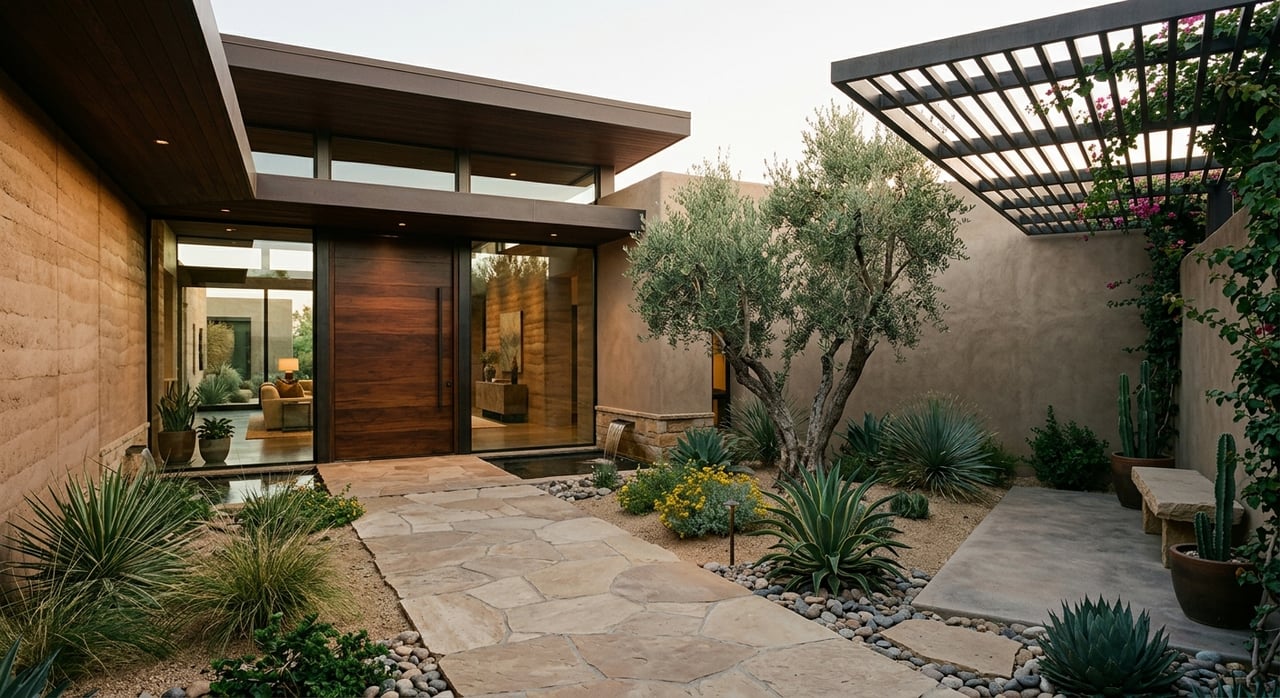
Paradise Valley Luxury Lifestyle Beyond the Resorts
May 7, 2026
May 7, 2026
What if the real appeal of Paradise Valley is not the resorts at all? For many buyers, that is exactly the point. If you are looking for a quieter luxury lifestyle with space, privacy, mountain views, and easy access to dining and amenities, Paradise Valley offers a very different experience than a typical high-end suburb. Let’s dive in.
Paradise Valley is a small town with a distinctly residential identity. The U.S. Census QuickFacts estimate for July 1, 2024 puts the population at 12,523 across 15.38 square miles of land, which works out to about 823 people per square mile.
That lower density is not accidental. According to the town’s history, Paradise Valley incorporated in 1961 to protect a rural lifestyle, maintain one-house-per-acre zoning, keep the area entirely residential, and limit government regulation. That long-term vision still shapes what daily life feels like today.
The town’s planning documents describe Paradise Valley as a place that has preserved tranquility, open space, dark skies, and mountain views while supporting an upscale lifestyle centered on primarily acre-sized residential lots. Instead of one large downtown, many residents identify more closely with smaller neighborhood areas throughout town.
If you picture Paradise Valley as a collection of estate neighborhoods rather than a conventional suburb, you are on the right track. Housing is primarily owner-occupied single-family homes on at least an acre of land, with larger lots in some areas.
The town’s Community Character and Housing materials make that clear, and current data reinforces it. QuickFacts shows that 95.0% of housing is owner-occupied and the median owner-occupied home value is $2,000,000+.
Local zoning supports that pattern. Paradise Valley uses low-density residential districts such as R-43, which allows one acre lots, and R-35, which allows 35,000-square-foot lots. Even where smaller lots appear through cluster provisions, the stated goal remains preserving the town’s low-density residential character.
For you as a buyer, that often means a lifestyle shaped by lot size, setbacks, views, and privacy. For you as a seller, it means your home is often being evaluated not just as a house, but as a complete setting that includes site placement, mountain orientation, and overall estate feel.
One reason Paradise Valley stands apart is how closely the town is tied to its natural surroundings. The town’s official visitor information describes it as a quiet desert oasis in the heart of the Scottsdale-Phoenix area, surrounded by Camelback Mountain, Phoenix Mountain Preserve, and the McDowell Mountains.
Those surroundings are not just visual. The Paradise Valley Mountain Preserve Trust notes that the preserve within the town includes Mummy Mountain, Camelback Mountain, and the Phoenix Mountain Preserve, with about 320 acres atop Mummy Mountain alone.
That preservation mindset matters in daily life. It helps explain why Paradise Valley feels open, scenic, and calm, even while sitting near some of the busiest luxury destinations in the region.
Paradise Valley is known nationally for its resorts, but living here is not the same as living in a resort district. That distinction matters if you want luxury amenities nearby without the feel of constant activity outside your door.
The town’s official pages list a long roster of destination properties, including Camelback Inn, Hermosa Inn, Mountain Shadows, Omni Scottsdale Resort and Spa at Montelucia, Sanctuary Camelback Mountain, and Andaz Scottsdale Resort and Bungalows. Golf options include Camelback Golf Club and Mountain Shadows Golf Club.
Dining is part of that ecosystem too. The town’s restaurant listings include options such as Lincoln Steakhouse, Rita’s Kitchen, Prado, Asadero Cocina and Cantina, JD’s Restaurant, Lon’s Restaurant, elements, El Chorro, Weft and Warp Art Bar + Kitchen, and Hearth ’61.
What makes Paradise Valley unique is the balance. You live in a primarily residential setting, then choose when to tap into nearby golf, spa, dining, and hospitality amenities. In other words, the lifestyle is often resort-adjacent, not resort-centered.
If you are moving from a place with retail corridors on every major road, Paradise Valley may feel noticeably calmer. The town’s business directory states that Paradise Valley is predominantly zoned single-family residential, with only limited commercial uses allowed when they are compatible with surrounding residential areas.
That helps explain why the town feels less like a mixed-use hub and more like a network of residential enclaves. Nonresidential uses tend to center around resorts, country clubs, medical clinics, schools, and churches rather than broad shopping strips or dense commercial clusters.
For many buyers, this is a major advantage. You can enjoy a quieter home base while still staying close to services and entertainment in surrounding areas.
Paradise Valley does not try to be a major shopping destination itself. In fact, the town’s retail page points residents to nearby shopping through Scottsdale resources, which says a lot about how the area functions day to day.
That nearby access is one of the strongest parts of the lifestyle. Experience Scottsdale reports that Old Town Scottsdale offers an eclectic mix of shops, more than 100 restaurants, nightlife, museums, galleries, and public art within just over one square mile.
Scottsdale Fashion Square adds another layer, with more than 200 premium retailers and multiple restaurants, according to Experience Scottsdale. The same regional sources also point to The Shops at Hilton Village near Scottsdale and McDonald roads, plus additional retail nodes such as Scottsdale Quarter and Kierland Commons.
For you, this creates a practical trade-off that many luxury buyers like. Home feels private and low-density, while major dining, shopping, and entertainment options remain close by.
Paradise Valley is not usually about walkable urban energy. It tends to appeal to buyers who prioritize privacy, lot size, views, and a more established residential setting.
The demographic profile supports that image. QuickFacts shows a median household income of $247,159, 74.3% of adults with a bachelor’s degree or higher, and 32.7% of residents age 65 or older.
Those numbers do not define any one buyer, but they do reinforce the town’s identity as an established, affluent community. If your priorities include quiet surroundings, space to spread out, and a home that feels like a retreat, Paradise Valley often checks boxes that are hard to match elsewhere in the Valley.
When you look at Paradise Valley, it helps to evaluate more than finishes and square footage. This is a market where the land, the view corridor, and the relationship between the home and its site can carry real weight.
That is especially true in a town shaped by low-density zoning and preserved open character. Acreage, setbacks, privacy, mountain orientation, and future surroundings can all influence how a property lives and how it holds value over time.
If you are comparing Paradise Valley with Scottsdale or nearby Phoenix neighborhoods, the difference often comes down to lifestyle structure. Paradise Valley typically offers more separation, more residential quiet, and less emphasis on an active commercial core.
If you own in Paradise Valley, your home is likely being judged in a highly specific luxury context. Buyers are not only comparing architecture and updates. They are also comparing setting, privacy, view impact, and how well the property fits the town’s estate-style identity.
That is why pricing and positioning matter so much here. A strategic approach can help frame the value of land, design, and overall lifestyle in a way that speaks to the right buyer.
For distinctive homes, custom properties, and design-conscious estates, details matter. How the property is presented should reflect the way buyers actually evaluate Paradise Valley living beyond the resort narrative.
Paradise Valley offers a rare combination in the Phoenix area. You get a quiet, primarily residential environment with mountain backdrops, protected character, and close access to some of the region’s best-known dining, golf, spa, and shopping destinations.
That is the real draw for many people. It is not about being in the middle of activity. It is about having the option to enjoy it, then come home to something more peaceful, private, and grounded in the landscape.
If that balance is what you want, Paradise Valley deserves a closer look. And if you are buying or selling here, local strategy matters just as much as local knowledge. To talk through Paradise Valley homes, land, or luxury positioning, connect with John Zook.
Experience a real estate partnership built on trust, expertise, and genuine care. John brings a lifelong understanding of what “home” truly means to every client and every decision.