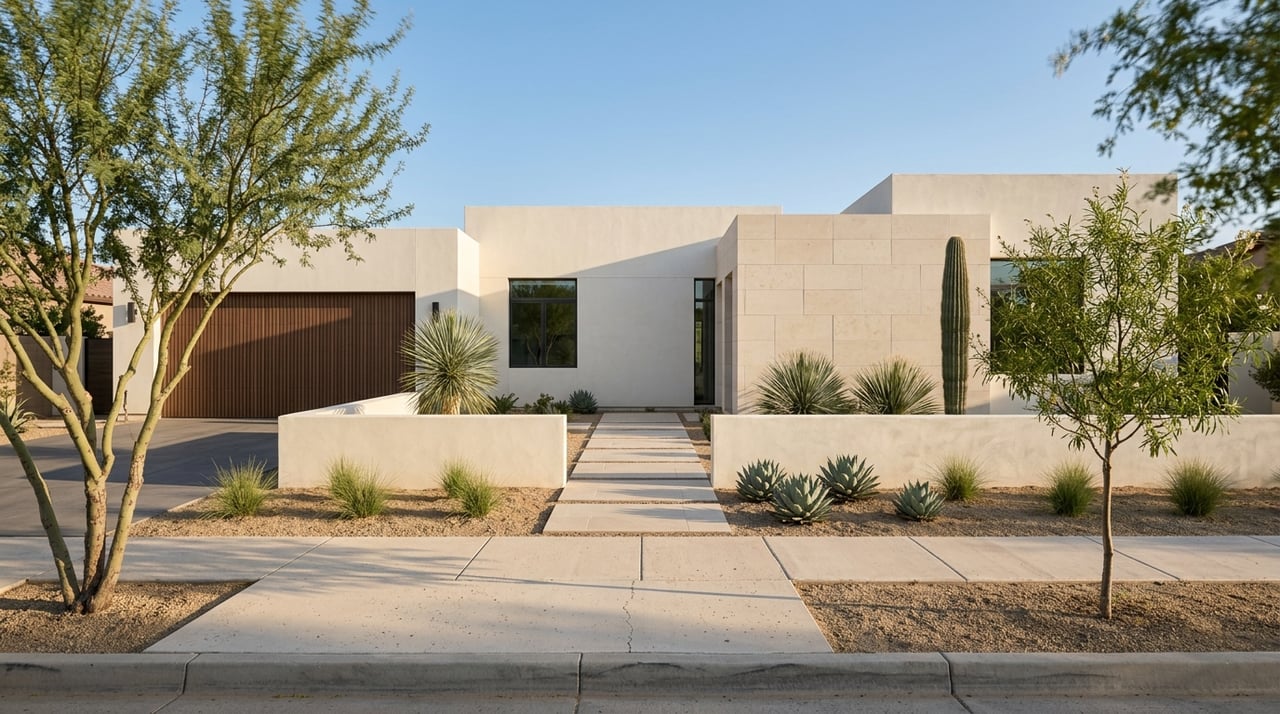
Arcadia Or Scottsdale For Design‑Focused Homebuyers
May 21, 2026
May 21, 2026
If you care as much about how a home feels as how it functions, choosing between Arcadia and Scottsdale can get complicated fast. Both areas attract buyers who notice architecture, setting, and daily lifestyle, but they deliver those qualities in very different ways. If you are trying to decide where your design priorities fit best, this guide will help you compare the character, rhythm, and housing context of each. Let’s dive in.
Arcadia is best understood as a close-in Phoenix neighborhood, with its eastern edge extending into Scottsdale. According to the City of Phoenix historic survey and planning materials, Arcadia generally sits north of the Arizona Canal and south of Camelback Mountain, with most of the area in Phoenix and the portion east of 64th Street in Scottsdale.
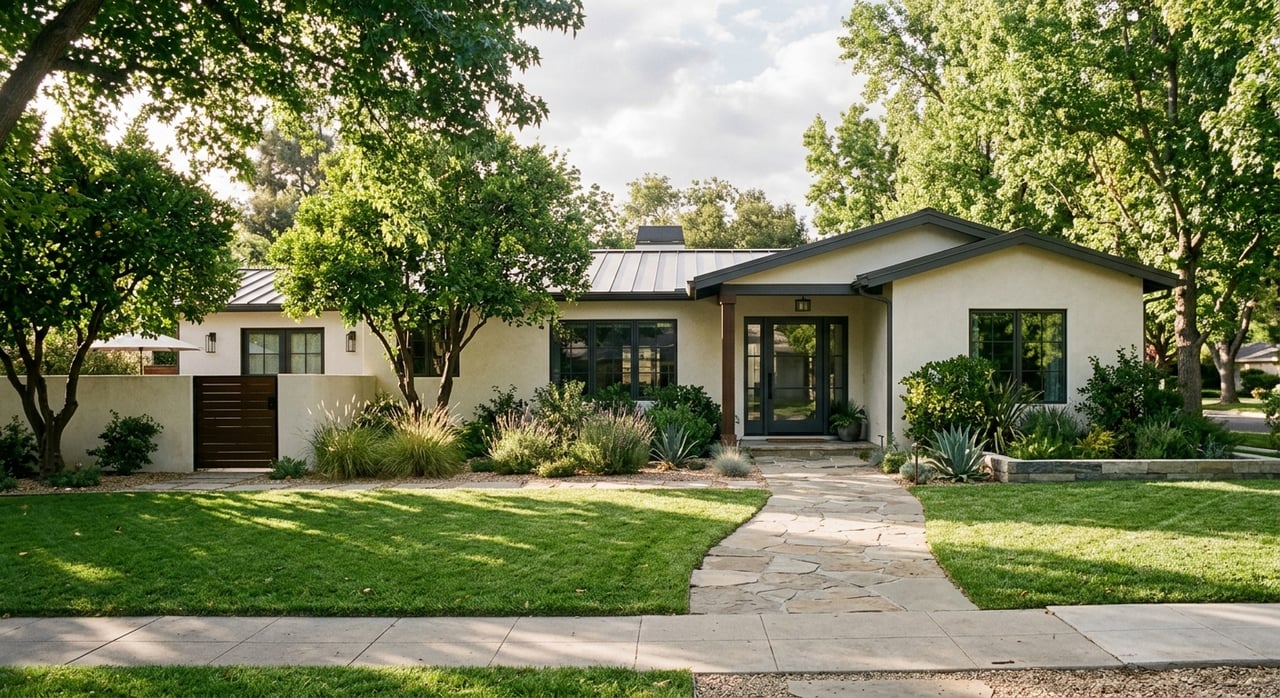
That geography matters because Arcadia feels distinct from the broader Scottsdale market. It began as a rural estate district with five- to ten-acre lots, large setbacks, irrigation, and an intentional appeal to buyers who wanted a rural setting. Even today, that origin still shapes how the area looks and lives.
For design-focused buyers, Arcadia is not about one uniform style. Its identity comes from a layered mix of homes and architectural details that have evolved over time while still reflecting its estate roots.
The City of Phoenix historic survey identifies examples of Spanish Colonial Revival, Pueblo Revival, and Monterey Revival in Arcadia. It also notes common details such as low-pitched clay-tile roofs, stucco or adobe walls, arched openings, and horizontal facades.
That mix gives Arcadia a sense of depth. Instead of feeling planned around one design language, it often feels curated over decades, with homes that reflect different periods while still fitting the larger neighborhood context.
If you are drawn to properties with visual history, larger setbacks, and a more established residential feel, Arcadia may speak to you immediately. Phoenix also describes the area as one of the Valley’s stronger collections of rural estate residences, which reinforces that sense of architectural presence.
Arcadia’s appeal is tied as much to setting as to style. Phoenix planning documents note that the area remains in demand because of its irrigation system, citrus-grove history, active neighborhood association, nearby communities, and relatively easy access to downtown Phoenix.
The same documents point to the Arizona Canal and Camelback Mountain as features that help keep the area quiet and insulated from traffic. In practical terms, that supports a more residential, retreat-like atmosphere rather than an urban one.
For some buyers, that distinction is everything. If your ideal home experience includes privacy, mature landscape legacy, and close-in convenience, Arcadia offers a very specific kind of calm.
Scottsdale is much larger and more varied than Arcadia. The city covers 184.5 square miles and includes places as different as Old Town, the McDowell Sonoran Preserve, and a long list of master-planned communities that began with McCormick Ranch in the early 1970s.
That means Scottsdale is not one answer to the question of design-focused living. It is really several different lifestyle and housing experiences under one city name.
For buyers, the smartest comparison is not Arcadia versus all of Scottsdale at once. It is Arcadia versus the specific Scottsdale experience you want most.
If you want the clearest contrast to Arcadia, look at Old Town Scottsdale. The city’s downtown character plan and design guidelines focus on site development, building form, materials, and downtown identity, which shows how intentionally this area is shaped.
Experience Scottsdale describes Old Town as nine walkable and bikeable districts with more than 100 restaurants, nightlife, two art museums, and more than 30 galleries in just over one square mile. Scottsdale also notes that a free trolley helps people move around Old Town.
For a buyer who wants design paired with activity, access, and urban momentum, Old Town stands apart. This is the Scottsdale choice for people who want their surroundings to feel creative, social, and highly connected.
Another Scottsdale path is the central area shaped by communities such as McCormick Ranch and Scottsdale Ranch. In this part of the city, the appeal often centers on planned amenities, outdoor access, and a more organized neighborhood framework.
Scottsdale says the Indian Bend Wash Greenbelt is an 11-mile corridor of parks, lakes, paths, and golf courses with more than 24 crossings. The city also notes a citywide trail system with 160 miles of trails.
For many buyers, that changes daily life in a meaningful way. If you want recreation, open space, and an amenity-rich setting woven into the neighborhood experience, central Scottsdale can feel more structured than Arcadia and more outwardly planned.
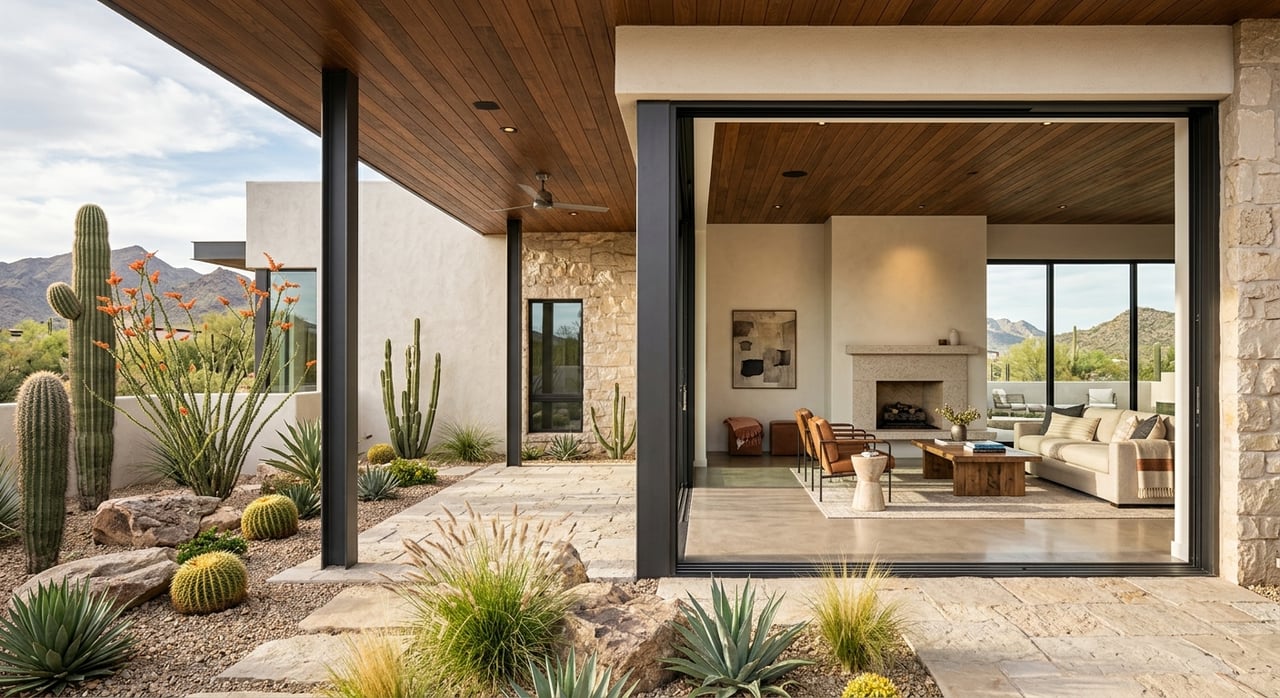
North Scottsdale offers yet another version of design-conscious living. Here, the defining feature is often the relationship between home, desert setting, and access to protected open space.
Scottsdale identifies the McDowell Sonoran Preserve as a large protected habitat with interconnected non-motorized trails. The city also points to communities such as DC Ranch as examples of master-planned development built around parks, paths, trails, roads, and athletic fields.
If your version of great design includes newer luxury homes, desert context, and community planning around outdoor systems, north Scottsdale may feel more aligned than Arcadia. It is often the better fit for buyers who want a newer master-planned luxury environment rather than a historic estate pattern.
If you are comparing Arcadia and Scottsdale, it helps to focus less on prestige and more on the type of design experience you want every day. The right answer usually becomes clearer when you define what matters most to you.
Arcadia is a strong fit if you want:
This option tends to appeal to buyers who value privacy, established surroundings, and homes that feel distinctive rather than uniformly planned.
Old Town Scottsdale may fit best if you want:
If your idea of good design includes being able to step out and engage with a lively streetscape, this is the strongest contrast to Arcadia.
Central Scottsdale could be the better match if you want:
This option often suits buyers who want convenience and recreation built into the area’s structure.
North Scottsdale may be right if you want:
For design-focused buyers, this can be the Scottsdale answer when architecture, open space, and lifestyle planning all matter.
Arcadia and Scottsdale can both work beautifully for design-conscious buyers, but they support different daily experiences. Arcadia is the close-in estate neighborhood with historic character, larger-lot roots, and a quieter residential rhythm. Scottsdale offers a wider menu, from Old Town’s walkable energy to central greenbelt living to north Scottsdale’s preserve-oriented luxury.
If you are deciding between them, the best move is to compare not just finishes or square footage, but setting, planning, and long-term fit. That is especially true in higher-end markets, where design value is often tied to context as much as the home itself.
When you want a clear, strategic read on where your priorities align, working with an advisor who understands design, positioning, and the differences between these micro-markets can help you make the right call with more confidence. If you are weighing Arcadia against Scottsdale, John Zook can help you evaluate the options with a sharper lens.
Experience a real estate partnership built on trust, expertise, and genuine care. John brings a lifelong understanding of what “home” truly means to every client and every decision.