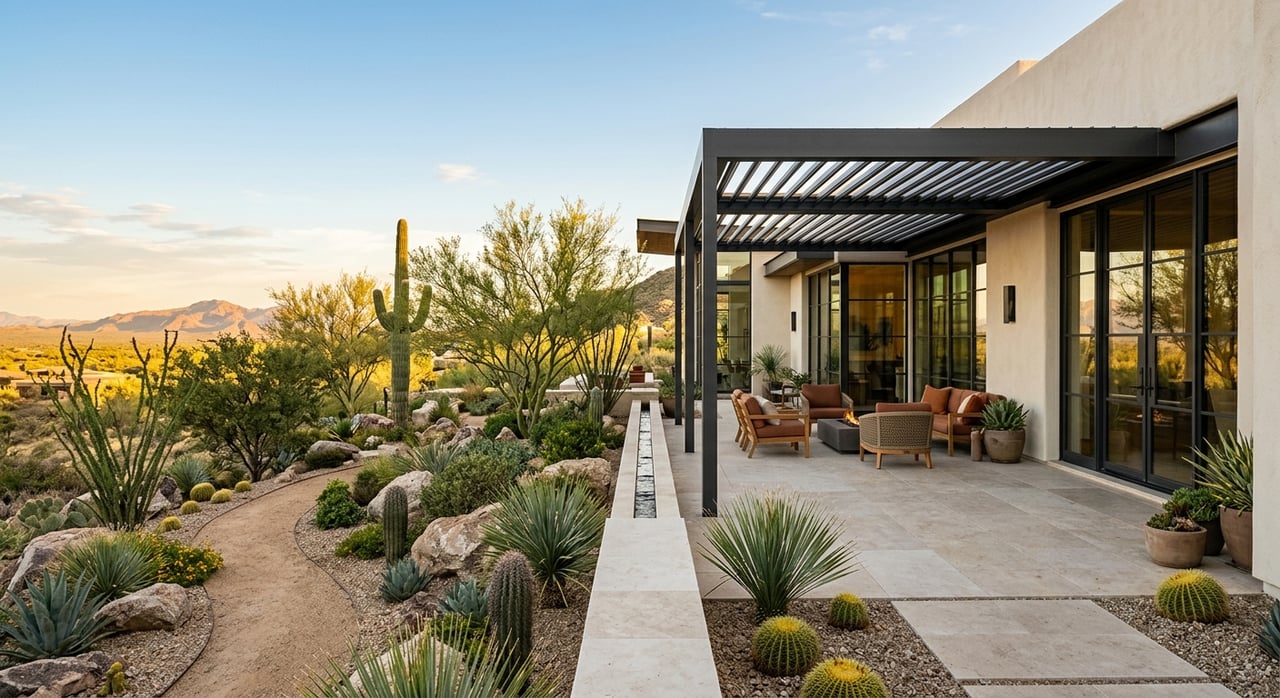
Build a Custom Home in Carefree AZ With a Smarter Plan
June 11, 2026
June 11, 2026
If you are thinking about building a custom home in Carefree, the lot you choose may shape your outcome as much as the house itself. In a market where views, site fit, and design compatibility carry real weight, early decisions can protect both your budget and your long-term value. The good news is that with the right planning, you can move through the process with much more clarity. Let’s dive in.
Carefree is not a plug-and-play custom home market. It is a high-value desert setting where topography, native landscape, and design standards all influence what makes sense to build.
That matters even more in today’s pricing environment. In March 2026, Redfin reported a median sale price near $1.3 million, while realtor.com reported a median listing price around $1.48 million and described the market as balanced. In a market like that, a poor lot choice or a mismatched building plan can affect resale more than many buyers expect.
The town also places clear emphasis on Sonoran Desert character, open space, and wildfire mitigation. That means your project is not only about square footage or finishes. It is also about how well the home fits the land and the local design framework.
One of the most common mistakes in a custom build is falling in love with a home concept before confirming whether the parcel supports it. In Carefree, that can create expensive changes later.
Before you move too far into design, confirm the parcel’s zoning district. Carefree includes districts such as Rural-190, Rural-70, Rural-43, R1-35, R1-18, and R1-10, and each district has its own minimum lot area standard. The right lot for your goals depends on more than the address or the view.
You should also verify access early. Carefree defines access as safe, adequate, and usable physical and legal ingress and egress. A parcel may look appealing on paper, but access and title conditions can directly affect buildability and timing.
In Carefree, not every view lot is automatically the best lot. Steep or rugged sites can bring added design complexity, more review requirements, and higher construction costs.
If the Zoning Administrator determines that a property contains a 50-foot run at 20 percent slope or greater, the town requires a slope and site analysis. That review can include ridgelines, washes, geotechnical conditions, mines, well sites, water tanks, and significant vegetation. In practical terms, this means the land itself may drive major decisions long before final plans are ready.
For parcels in Rural-190 and Rural-70 districts, conservation easements may also be used to relax setbacks and lot width. That can create flexibility, but it also adds another layer of planning that should be understood before you commit to a purchase or a final design.
Utility planning should happen at the beginning, not near the end. A design that works beautifully on one parcel may need major revisions on another if service conditions differ.
Carefree requires new utility lines to be underground. The town identifies APS, Carefree Water Company, Southwest Gas, and sewer service through Liberty Utilities and Black Mountain Sewer Company. If a parcel is not served by sewer, onsite wastewater permitting is handled through Maricopa County and ADEQ.
That is why utility verification matters before you lock in your layout, grading strategy, or guest house plans. If you skip this step, you risk designing for conditions that do not exist on the site.
Carefree’s approval path is more structured than many buyers expect. The town’s online permit and license portal went live on September 4, 2025, and in-person submittals are no longer accepted.
The portal covers building permits, planning and zoning applications, engineering permits, and inspection requests. If you are assembling a custom-home team, make sure everyone is prepared to work within that digital process.
The Building Department states that all construction requires a permit. Carefree also says a zoning clearance and building permit are required before starting any construction, including grading or grubbing. For some mountainside developments, a site or development plan must be reviewed and approved by the Development Review Board before a building permit can be issued.
Your design team should understand Carefree’s adopted codes at the start of the project. The town states that it has adopted the 2018 IBC, IRC, IPC, NEC, IMC, IFC, IECC, IFGC, and IPMC.
The town also states that new residential and commercial buildings must have fire sprinkler systems. In a desert community that emphasizes wildfire mitigation, that is an important design and budgeting item to factor in early.
This is one reason custom-home planning in Carefree works best when architecture, engineering, site planning, and permitting are all coordinated from the beginning. A strong concept still has to align with local code, site conditions, and review standards.
In Carefree, landscaping is not a finishing touch. It is part of the approval process.
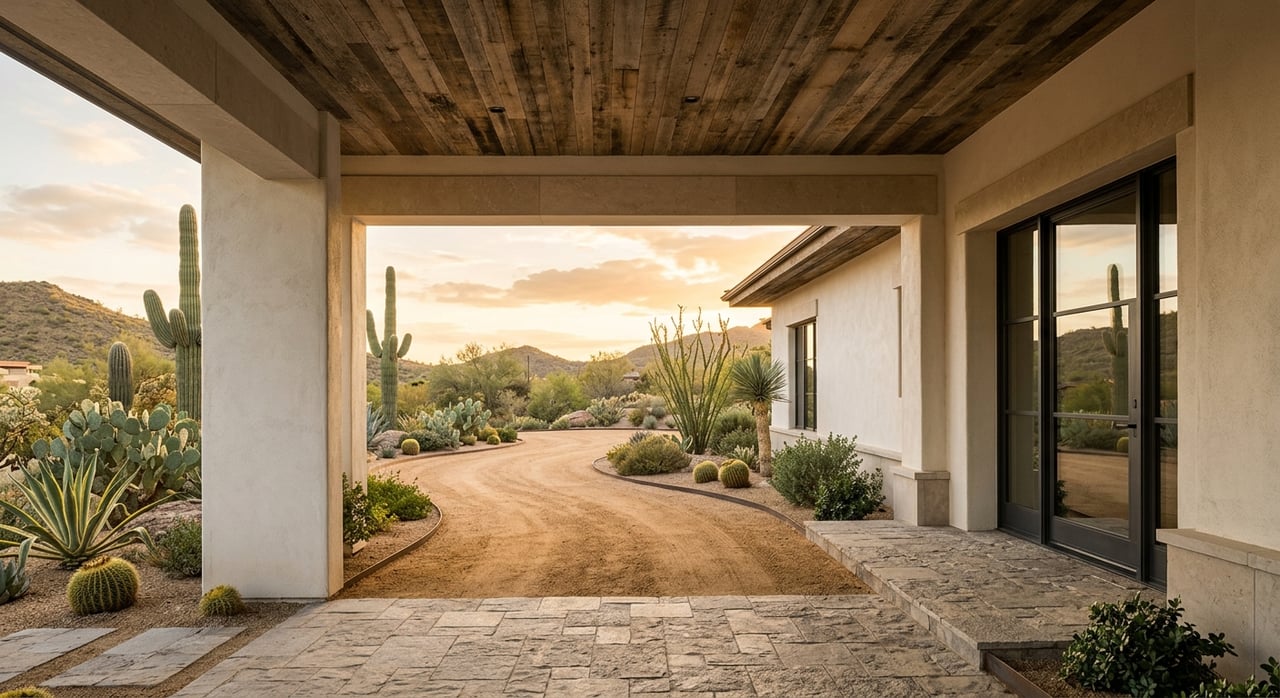
The town will not issue zoning clearance or a building permit until a landscape plan is approved. Required yards must rely on native desert vegetation, and protected plants cannot be removed unless they are not salvageable. That can affect siting, driveway placement, and how much disturbance makes sense on the lot.
The code also allows a 30-foot fire-suppressant buffer around buildings to be thinned and trimmed for wildfire protection. That creates a practical balance between preserving desert character and planning for defensible space.
If you want a guest house or casita, confirm the rules before you assume it fits your program. Carefree does allow guest houses, but the limits are specific.
The code allows only one guest house per lot. It also limits the guest house to one-third of the principal home’s livable area, requires shared utility meters, and generally requires a common driveway unless the Zoning Administrator approves otherwise.
For many custom-home buyers, that is a manageable framework. Still, it is important to design around those limits from the start rather than trying to force them in later.
A smoother custom build usually starts with the right order of operations. Based on Carefree’s zoning, review, and permitting rules, a practical sequence looks like this:
This sequence helps you make key decisions while your options are still flexible. It also reduces the risk of spending design money before you understand the lot’s true constraints.
Timing matters in the desert, especially during warmer months. Carefree’s 2025 construction-hours notice states that from May 1 through October 15, weekday construction may run from 5:00 a.m. to 7:00 p.m., while Saturday work may run from 7:00 a.m. to 7:00 p.m.
The town also allows weekday concrete pours to begin as early as 4:00 a.m. The Building Department says inspection requests must be submitted by 4 p.m. to be considered for the next available day. Small scheduling details like these can affect construction rhythm and expectations.
Wildfire readiness should be built into both construction and long-term property management. Carefree Fire Department messaging emphasizes wildfire prevention, defensible space, and Firewise practices.
The town also highlighted three HOA communities that earned Firewise USA certification in 2025. That reflects a broader local focus on practical wildfire mitigation rather than treating it as an afterthought.
For your project, that means thinking beyond code minimums. Site layout, vegetation management, and ongoing maintenance all play a role in how the home performs over time.
The strongest custom homes in Carefree usually do not fight the site. They work with it.
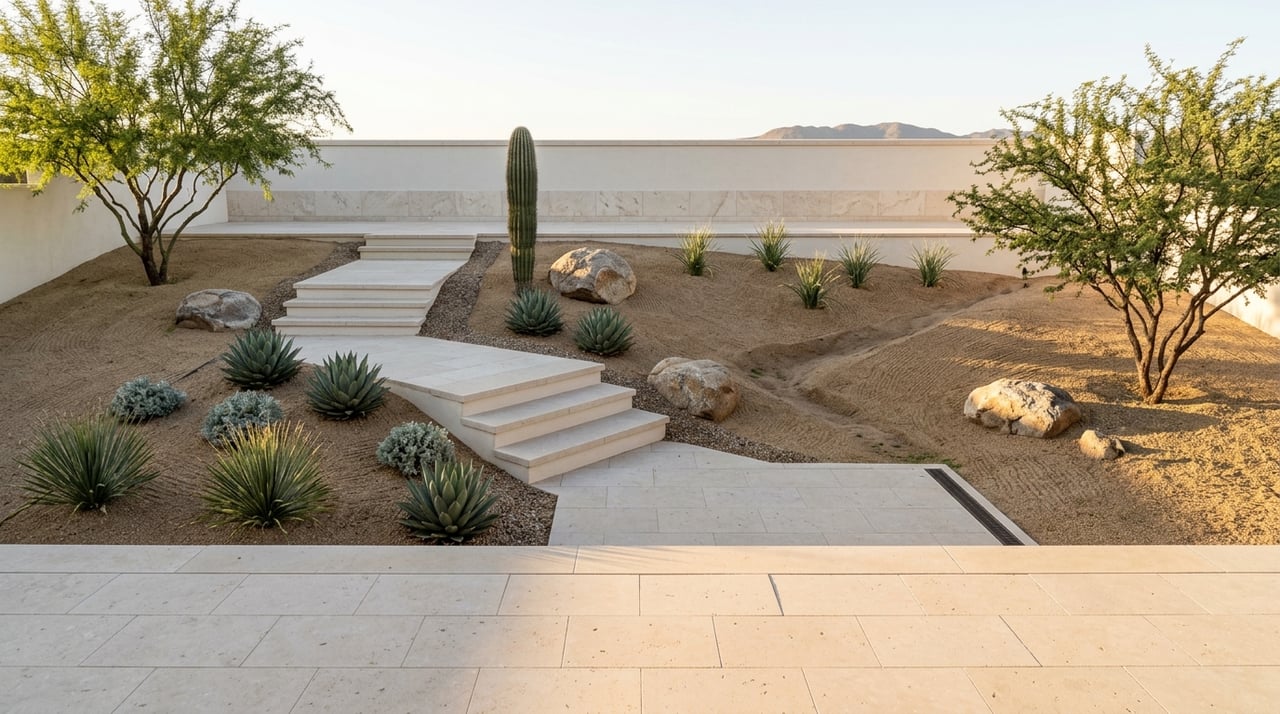
Projects that preserve native desert character, avoid unnecessary grading, respect setbacks and conservation areas, and use materials and massing that fit the town’s design framework are more likely to hold a premium feel over time. Oversized or visually out-of-place builds can be more vulnerable in a balanced market where buyers are paying attention to setting and design compatibility.
If you are planning a custom home here, the goal is not just to get approved and get built. It is to create a home that feels right for the parcel, the town, and the next chapter of ownership.
If you want experienced guidance on evaluating land, understanding site fit, and making smarter new-construction decisions in the greater Phoenix market, connect with John Zook.
Experience a real estate partnership built on trust, expertise, and genuine care. John brings a lifelong understanding of what “home” truly means to every client and every decision.