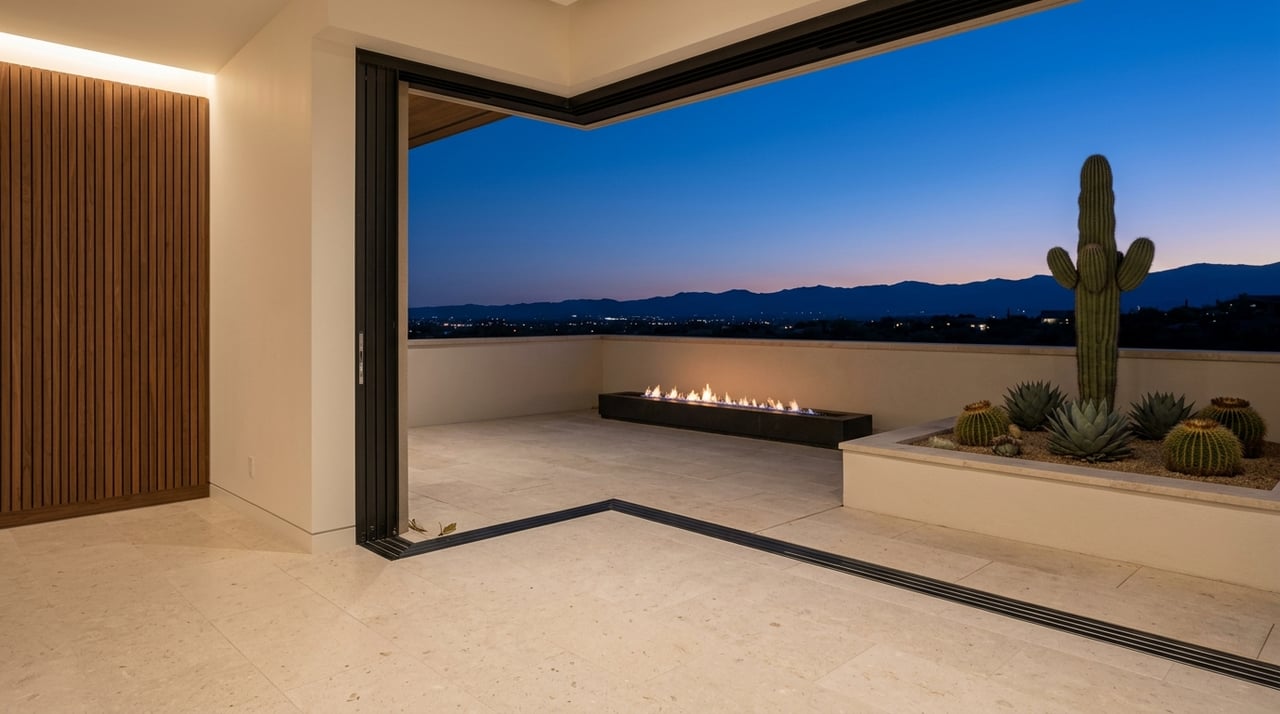
Comparing Fountain Hills vs Scottsdale Views for Buyers
June 18, 2026
June 18, 2026
If views are at the top of your list, choosing between Fountain Hills and Scottsdale can feel harder than it should. Both offer desert beauty, mountain backdrops, and strong appeal for luxury buyers, but they deliver that experience in very different ways. If you want to narrow the decision with more clarity, this guide will help you compare the view experience, lifestyle, and access points that matter most. Let’s dive in.
When buyers say they want a “view home,” they do not always mean the same thing. Some want wide-open desert horizons and mountain ridgelines, while others want preserve views, valley outlooks, or even city lights from the right elevation.
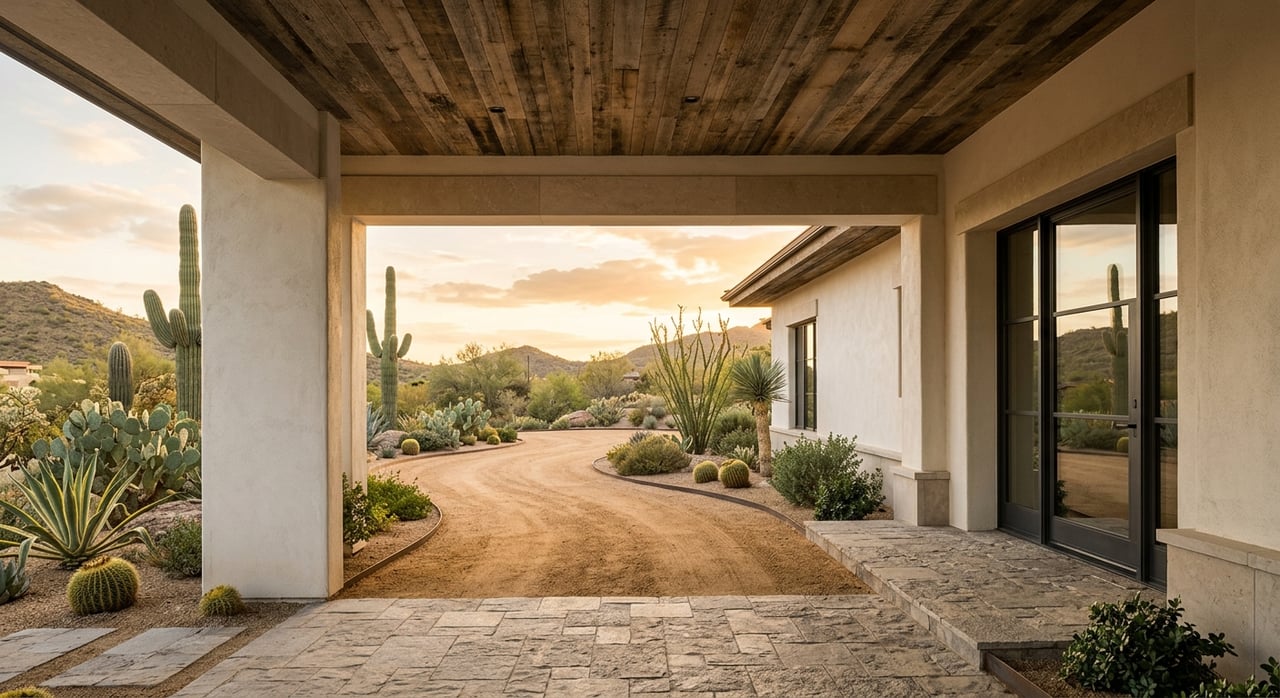
That is why this decision is often less about one city being better and more about which setting fits how you want to live. In Fountain Hills, the feel is typically more consistently desert-forward. In Scottsdale, the range is broader, so your experience can change a lot by neighborhood, elevation, and lot orientation.
Fountain Hills is a master-planned community established in 1970 in the northeast Phoenix Valley, east of Scottsdale. The town says its elevation rises from about 1,520 feet at the fountain to 3,000 feet on Golden Eagle Boulevard, with low ridgelines and wash corridors shaping much of the landscape.
For you as a buyer, that often translates into long sightlines, mountain backdrops, and a strong sense of open desert around you. The town also notes that its dark skies support stargazing, which adds another layer to the nighttime experience many buyers value.
Fountain Hills also has a signature view feature near the center of town. Fountain Park is a 64-acre passive recreation area built around a 29-acre lake and the town fountain, so some homes near that area may appeal to buyers who want lake-and-fountain outlooks in addition to desert scenery.
Scottsdale gives you more variety because it is much larger. The city reports 184.5 square miles of land and elevations ranging from 1,150 to 4,877 feet above sea level, which creates a wider mix of view settings.
The city sits in the Sonoran Desert at the foot of the McDowell Mountains and includes access to the McDowell Sonoran Preserve, a permanently protected desert habitat of roughly 35,000 acres with more than 60 miles of trails. For view-home buyers, that usually means more options to target preserve adjacency, mountain outlooks, and valley-facing lots.
If city lights are part of your wish list, Scottsdale is usually the stronger place to explore that possibility. Still, that should be treated as lot-specific and elevation-dependent, not something every Scottsdale view home will automatically provide.
Fountain Hills tends to appeal to buyers who want a quieter, more residential setting with a strong outdoor identity. The town’s parks system totals 119 acres across five developed parks, and its Town Center is described in the General Plan as a walkable and bikeable mixed-use district anchored by Fountain Park, the Civic Center, and the Visitor’s Center.
The amenity mix feels compact and easy to understand. Official town materials highlight golf, hiking, biking, boating, and more than 150 publicly displayed artworks, giving the community a recognizable rhythm without the density of a larger city.
If you want a view home where the surrounding lifestyle feels calm, scenic, and less built-up, Fountain Hills often checks that box well. It can be especially appealing if your idea of luxury leans toward space, desert light, and a more tucked-away atmosphere.
Scottsdale offers a deeper amenity stack and a more urban range of experiences. The city says Old Town Scottsdale includes more than 90 restaurants, 320 retail shops, and more than 80 art galleries, while Scottsdale Civic Center adds museums, a library, fountains, an amphitheater, and performing arts venues.
Scottsdale also pairs that energy with major outdoor access. In addition to the preserve, the city highlights trails, sports complexes, aquatic centers, and open-space programming through its parks and recreation system.
If you want views without giving up restaurant options, retail, arts, and broader recreation access, Scottsdale gives you more to choose from. For many luxury buyers, that balance is the deciding factor.
Views matter, but so does how a home works on an average Tuesday. That is where Fountain Hills and Scottsdale often begin to separate for buyers.
Fountain Hills relies heavily on Shea Boulevard as its main gateway, with town planning materials identifying it as the primary route in from State Route 87. In practical terms, that often means a more secluded setting, but it can also mean less day-to-day convenience depending on where you need to go regularly.
Scottsdale generally offers easier in-city access. The city provides broader transportation connectivity, Valley Metro resources, and proximity to major employment areas, especially around north Scottsdale and the Airpark, where the city says about 48,000 employees work.
Because Scottsdale stretches 31 miles from north to south, commute experience varies a lot by submarket. Still, for many buyers trying to balance views with convenience, north Scottsdale tends to be a natural place to focus.
If you do not want to choose between scenic views and practical access, the north Scottsdale and Shea corridor areas often deserve a closer look. Scottsdale’s Shea corridor guidelines describe the area as one with mountain and valley views, and Shea Boulevard serves as a regional connection between the metro area and Fountain Hills.
That makes this corridor a useful middle ground for many buyers. You can often stay closer to preserve access, retail and dining options, and stronger regional connectivity while still targeting lots with meaningful visual appeal.
For buyers comparing the two cities, this is often where the decision sharpens. You may find that what you really want is not one city over the other, but the right position along that broader east Scottsdale to Fountain Hills spectrum.
A great view home is rarely just about the address. It is usually about how the lot sits, what it faces, and what is around it.
When comparing options, pay close attention to:
This is especially important in Scottsdale, where the city’s size creates much more variation from one area to the next. It also matters in Fountain Hills, where even a small shift in elevation or ridgeline position can change the feel of a property.
For most buyers, this is not really a Fountain Hills versus Scottsdale debate in the abstract. It is a lot-by-lot decision shaped by elevation, orientation, open-space adjacency, and how much convenience you want around the home.
Fountain Hills often delivers a more consistently mountain-framed and open-desert feel. Scottsdale offers more variety, more preserve-driven options, and more ways to blend scenery with dining, retail, and access.
The right answer depends on whether you want your view home to feel more secluded and panoramic, more connected and flexible, or somewhere in between. If you approach the search with that lens, you are much more likely to buy the right property the first time.
If you want help evaluating view lots, custom homes, or luxury opportunities in Scottsdale, Fountain Hills, and nearby desert markets, connect with John Zook.
Experience a real estate partnership built on trust, expertise, and genuine care. John brings a lifelong understanding of what “home” truly means to every client and every decision.