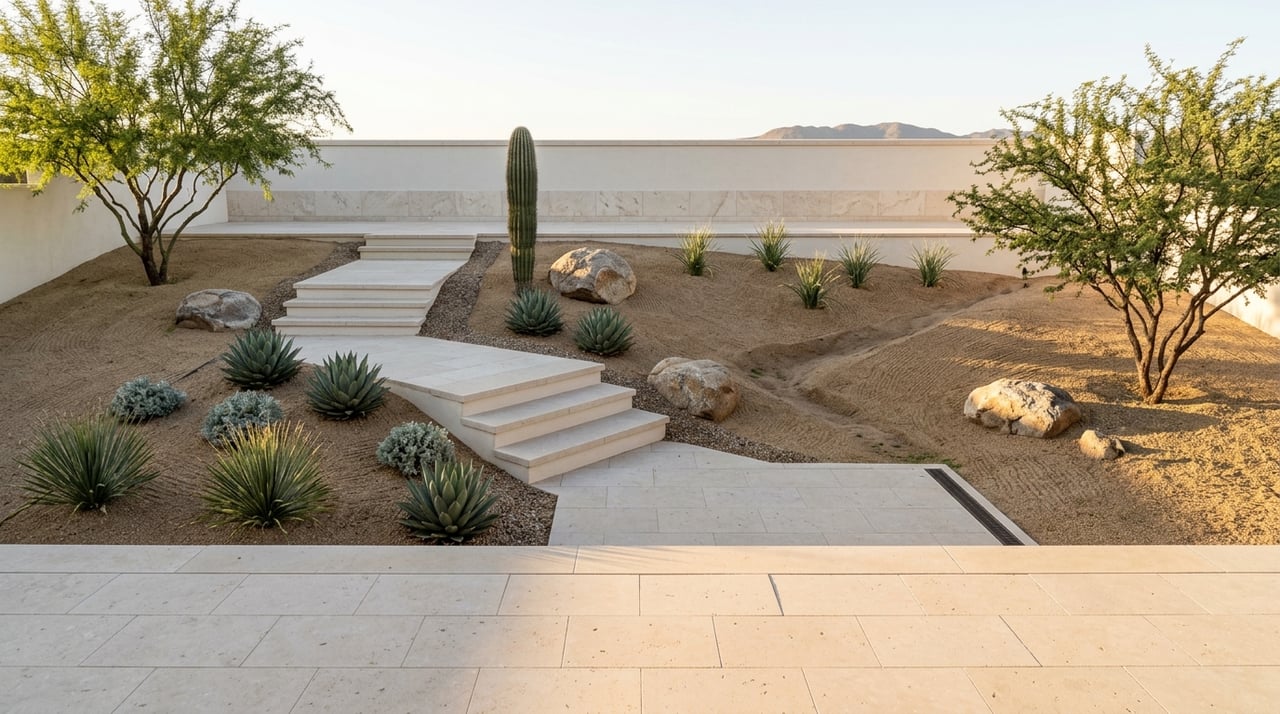
How To Assess A View Lot In Fountain Hills
June 25, 2026
June 25, 2026
A Fountain Hills view lot can look spectacular at first glance, but a great view does not always mean a great purchase. If you are weighing a lot for a custom home, you need to look past the panorama and study how the site will actually live, build, and hold value over time. The good news is that a careful review can help you separate a scenic parcel from a smart one. Let’s dive in.
Fountain Hills is not a place where views feel incidental. The town describes itself as a mountain-framed desert community in northeastern Maricopa County, with elevations ranging from about 1,520 feet at the fountain to about 3,000 feet on Golden Eagle Boulevard.
That terrain is a big reason view lots carry so much appeal. Official town materials also point to roughly 3,940 acres of open space, golf courses, and parks, while the general plan emphasizes native desert vegetation, topography, and natural resources as part of the community’s long-term identity.
In other words, when you buy a view lot in Fountain Hills, you are not just buying a backdrop. You are buying into a setting where scenery, landform, and desert character are part of the town’s value story.
The first question is simple: what do you actually see, and from where? A lot may photograph well from the street, but that does not always translate into daily enjoyment once a home is built.
The most useful views are usually the ones you experience from the spaces that matter most. Think about the great room, primary suite, patio, pool area, and outdoor living spaces. A strong sightline from those areas is usually more meaningful than a view that only appears from a side yard or one corner of the lot.
Lot orientation can shape light, heat, and how the view feels throughout the day. It is worth asking which direction the parcel faces and how that orientation will affect the main living spaces.
A mountain view may be stunning in one direction but less useful if the best sightline ends up behind the garage or outside the main entertaining areas. On a premium lot, the view should work with the home’s layout, not fight against it.
A dramatic ridgeline or open desert vista can be a major draw, but you should also picture everyday life on the site. Ask yourself whether the lot supports the way you want to live, entertain, and use outdoor space.
That matters because some parcels offer a beautiful horizon but very little functional area for a pool, patio, or yard. In many cases, the best lot is not the one with the most dramatic angle. It is the one that balances view, privacy, and usable living space.
In Fountain Hills, slope is one of the biggest factors in evaluating a view lot. Higher vantage points often come with steeper terrain, and steeper terrain can mean more grading complexity, retaining work, and less usable flat area.
The town’s current subdivision ordinance treats land with slopes of 20 percent or more as hillside area. It limits disturbance on those areas to 40 percent and uses survey-stamped topographic mapping to calculate slope.
That means you should not assume a scenic lot will be simple to develop. A parcel can have excellent elevation and still be a challenging build site.
Fountain Hills also adopted canyon-side lot regulations for steep residential lots with slopes above 30 percent. For buyers, the takeaway is clear: steep lots can create a premium feel, but they can also reduce flexibility in site design.
Some parcels may be harder to develop under standard rules because of lot shape or steep street-adjacent slopes. The town’s ordinance allows limited modifications in some cases when the Development Services Director finds standard development impractical, but that does not change the core point. A dramatic lot may require more planning and more careful budgeting.
One of the smartest questions you can ask is: how much of this lot will actually function once the home is built? The answer can be more important than the gross lot size.
A parcel may look large on paper but lose meaningful usable area because of slope, setbacks, grading limits, or the shape of the site. If your goal is to create a home with generous indoor-outdoor flow, this step is essential.
A current view is only part of the story. You also need to ask whether that view is likely to survive after surrounding parcels are improved.
Fountain Hills’ Planning & Zoning Division handles zoning changes, subdivision plats, variances, special-use permits, concept plans, and amendments to the general plan and town code. The town also maintains GIS resources and publishes building-development, land-use, plat, and zoning maps.
That is important because a vacant parcel next door may not stay vacant. Before paying a premium for a view, you should understand what nearby land is legally allowed to become.
If a lot overlooks private land, the next move is to study the surrounding parcels. A beautiful sightline across open ground can feel secure, but if that land can be developed later, your view may be less durable than it seems.
By contrast, lots that border preserved open space, non-disturbance areas, or other low-intensity land uses may offer more lasting appeal. In practical terms, a slightly smaller but more defensible view can be the better long-term choice.
The town states that its online planning resources are provided as a courtesy and that customers are responsible for their own due diligence. That makes verification especially important.
Before moving forward, it is wise to confirm parcel maps, zoning, plats, and any recorded easements. When you are buying a premium lot, protecting the view is just as important as admiring it.
Desert lots come with practical issues that deserve the same attention as the view. If a parcel sits near a wash, drainage corridor, or low-lying edge, floodplain review should be part of your checklist.
Maricopa County notes that desert flooding still happens during summer monsoon and winter storms, and Fountain Hills conducts its own floodplain management. On a desert homesite, drainage is not a minor engineering detail. It is part of whether the lot is safe, insurable, and reasonably buildable.
If you are planning to build, code timing matters too. Fountain Hills says permit applications received on or after September 1, 2025 must use the 2024 code set, including the 2024 International Residential Code with appendix G.
That may not change whether you love a parcel, but it can affect your planning process. For a buyer considering a custom home or future spec opportunity, current local requirements should always be part of the conversation.
A view lot is not just about present enjoyment. It is also an asset decision, especially in a market where premium homes often compete on design, setting, privacy, and outdoor experience.
Research cited in the report supports the idea that desired aesthetic views can sell at a premium. It also shows that the degree of view obstruction can affect property value.
The practical lesson is simple: durability matters. A stable view may be more valuable than a more dramatic view that carries a higher risk of future blockage.
In Fountain Hills, strong resale appeal usually comes from a combination of factors rather than one standout trait. The most compelling lots tend to bring together:
When those pieces line up, the lot often feels premium in a way that lasts. That is the kind of value buyers tend to recognize again at resale.
If you want a practical framework, use this checklist when assessing a Fountain Hills view lot:
The best Fountain Hills view lots are the ones whose views are attractive, buildable, and defensible over time. That means judging the parcel by more than the current panorama.
You want to know where the view is experienced in the home, how much of the site is usable, what nearby parcels can legally become, and whether the lot supports the lifestyle you actually want. In a market like Fountain Hills, that level of due diligence can protect both your enjoyment and your long-term value.
If you are evaluating a view lot, custom homesite, or land opportunity in the greater Phoenix area, John Zook offers a strategic, construction-aware perspective to help you make a smarter decision.
Experience a real estate partnership built on trust, expertise, and genuine care. John brings a lifelong understanding of what “home” truly means to every client and every decision.