Checking Hillside Approval Status in Paradise Valley
October 1, 2026
October 1, 2026
A hillside lot in Paradise Valley can carry two very different values depending on one detail buyers should check early: whether the Town's approval to build on it is still alive. Two parcels with identical slope, identical acreage, and identical asking price can sit on opposite sides of that question, and the difference is not cosmetic. One buyer inherits a design that's already cleared the Hillside Building Committee. The other inherits a blank slate and a review process that can add months before a shovel touches the ground.
This is because Paradise Valley's Hillside Building Committee approvals do not run with the land indefinitely. They expire within a year of issuance, or once the building permit tied to them goes inactive. A lot marketed as "hillside approved" or "plans in hand" can lose that status while it's sitting on the market, so a buyer should confirm whether the prior owner's clearance remains valid for the proposed project.
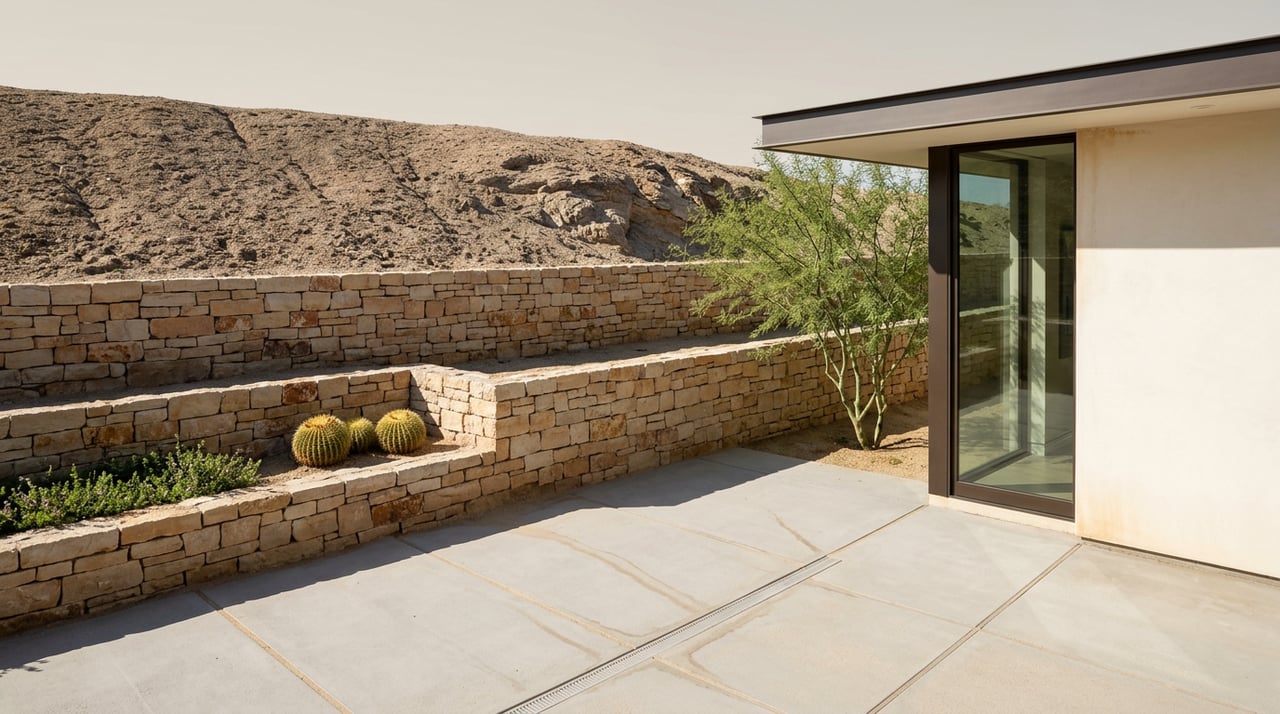
Article XXII of the Town's zoning ordinance kicks in on any building site with a slope of 10 percent or more, whether or not the parcel appears on the Town's hillside map. Once a lot is classified that way, the ordinance caps how much of it can be disturbed by grading, cutting, filling, or clearing native vegetation, and that cap tightens fast as the ground gets steeper.
Jematell Homes puts allowable disturbance at about 60 percent of the building site for a 10 percent slope. At 25 percent, it's down near 13 percent of the site. A wash running through an otherwise flat lot can pull the whole parcel into hillside status even when the rest of the ground looks buildable.
This is why two lots priced the same can support very different homes. The one with a gentler pad might let you build the footprint you're picturing. The one with a steeper pad, even on paper the same acreage, might only let you touch a tenth of it, which reshapes everything from garage placement to pool location before an architect draws a line.
Here is the part that changes how a buyer should read a hillside listing. The Hillside Building Committee's approval on a given plan is not permanent. Once granted, it expires within a year of issuance, or once the building permit tied to it goes inactive. A seller who got hillside approval eighteen months ago and then paused, whether for financing, a design change, or simply timing the market, may be marketing a lot as "approved" when the approval underneath it has already lapsed.
For a buyer, that means the calendar on the listing photo and the calendar the Town is actually running can be two different things. A lot that looks like it saves a year of review might not save any time at all if the clock ran out before you closed. The only way to know is to ask directly and in writing: when was the Hillside Building Committee approval granted, is the building permit currently active, and if not, how long has it been dormant. None of that shows up in a listing description, and none of it shows up in a walkthrough.
The Town's own data on how much of Paradise Valley this touches puts the stakes in perspective. Roughly 1,000 of the town's parcels carry hillside designation, spread across about 2.9 square miles, out of a town with just under 6,800 parcels total. That's roughly one in seven Paradise Valley lots where this entire approval question applies, and it's concentrated in the areas buyers are often most drawn to for view and privacy.
The lots where this friction surfaces most are not evenly distributed. Listing activity aimed at teardown and redevelopment has clustered in pockets like Clearwater Hills, Sunset Hills, Chaparral Estates, Braecrest, Franciscan Terrace, and Sunburst Farms Hallcraft, areas that pair older housing stock with the kind of elevated, view-oriented terrain that tends to trigger the 10 percent slope threshold. That's a snapshot of where redevelopment conversations are visibly active rather than a complete map of every hillside parcel in town, but it's a reasonable starting point for where the expiration question is worth raising early.
Paradise Valley is also close to built out, with the bulk of its planning area already in low or very low density residential use. That means most of the activity a buyer sees in these neighborhoods is infill: an older home coming down, a newer one going up on the same footprint, or a vacant hillside parcel changing hands after a previous buyer's plans stalled. As of April 2026, roughly 372 homes were listed for sale across the town, and the majority of those sit on lots that predate the current hillside code entirely. An "approved" lot is the exception in this market, not the rule, which is exactly why it needs to be verified rather than assumed.
A related trip point shows up for buyers who think they're avoiding hillside review altogether by planning a remodel instead of new construction. The Town requires a demolition permit, obtained before the building permit, once a project removes more than 12 linear feet of wall or fence or more than 12 square feet of roof structure. A renovation that looked modest on the back of an envelope can cross that line without anyone intending it to, and once it does, the project moves into the same review sequence as a full teardown, hillside considerations included if the lot qualifies.
For a buyer working from a contractor's rough estimate rather than a stamped plan, that threshold is easy to miss until the permit application comes back asking for documents nobody budgeted time to produce.
None of this argues against buying a hillside lot in Paradise Valley. The view and privacy that come with elevation are a large part of what draws buyers to this segment in the first place. It does argue for treating "approved" as a claim to verify rather than a feature to take at face value.
Before writing an offer on a hillside parcel, or a flatland lot with an older home likely to redevelop, it's worth confirming three things directly with the seller or their representative: the date of any existing Hillside Building Committee approval, whether the building permit tied to it is currently active, and the parcel's slope classification if that hasn't already been established. A rough slope read is available through the Maricopa County Assessor's parcel viewer, and it's a reasonable first check before assuming a lot's disturbance budget matches its acreage.
Does every home in Paradise Valley need hillside review? No. Only parcels where the natural terrain under the building pad slopes 10 percent or more fall under Article XXII, whether or not the lot appears on the Town's hillside map.
Can a buyer check a hillside approval's status before closing? The Town's Hillside Building Committee maintains records tied to each application, and confirming a permit's active status is a reasonable request to make part of due diligence before removing contingencies.
If you're weighing a hillside lot or a teardown candidate in Paradise Valley and want a clear read on what a parcel's slope actually allows before you make an offer, John Zook can walk through the approval history and disturbance math with you as you evaluate the parcel.
This article is general information, not legal, tax or financial advice. Consult a qualified professional about your situation.
Experience a real estate partnership built on trust, expertise, and genuine care. John brings a lifelong understanding of what “home” truly means to every client and every decision.