What a Fountain Hills View Lot Actually Costs Before You Break Ground
September 24, 2026
September 24, 2026
The number on the listing is the opening position, not the answer. In Fountain Hills, two lots can carry the same list price, sit a quarter mile apart, and still land tens of thousands of dollars apart in what it costs to actually put a house on them. The gap has nothing to do with negotiation and everything to do with slope and soil. Whether the lot falls within the Neighborhood Property Owners' Association (NPOA) jurisdiction can also affect the costs due at closing.
If you are pricing land here, or advising a client who is, the list price tells you almost nothing about the total cost of the site. The real number is built from a hillside ordinance that limits how much of your lot can be disturbed, a soil condition that adds cost before your foundation goes in, and NPOA fees that may be due at closing for properties within its jurisdiction.
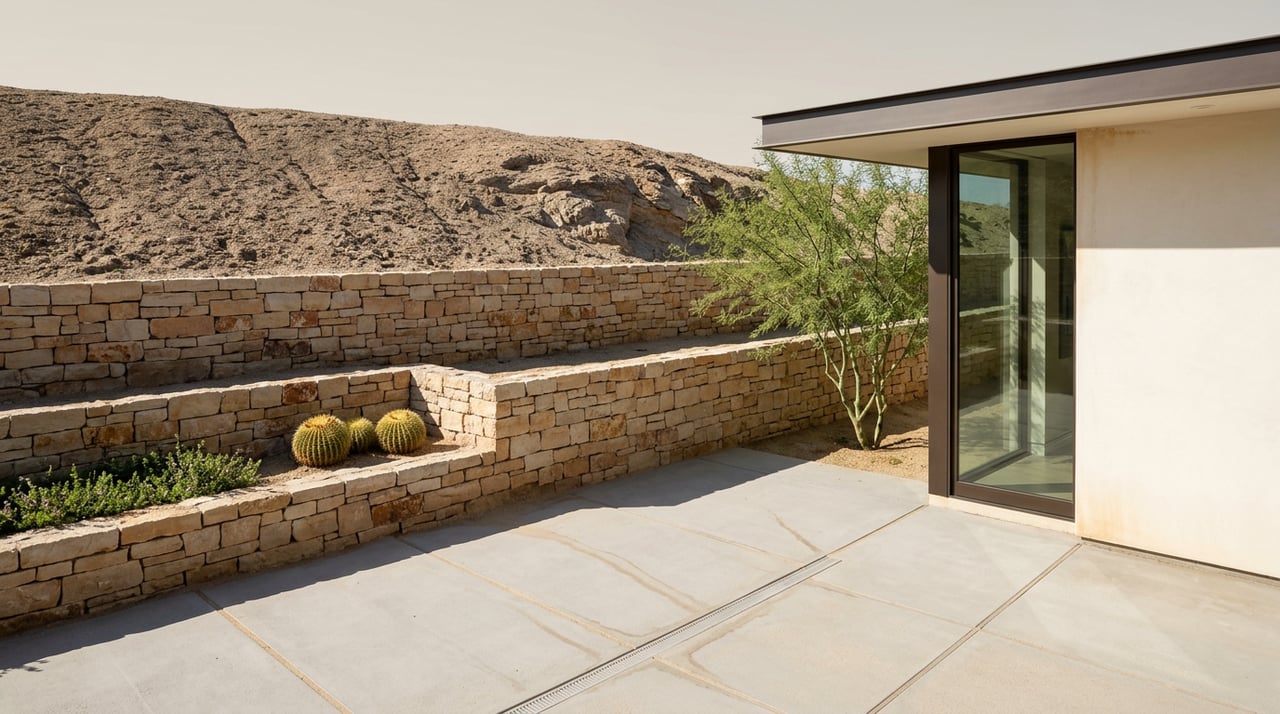
Fountain Hills defines a hillside lot by a specific threshold: any slope of 20 percent or greater falls under the town's hillside disturbance rules, which cap how much of that ground can be graded, cleared, or built on. The steeper the lot, the smaller the buildable envelope, and the more engineering it takes to make the rest usable.
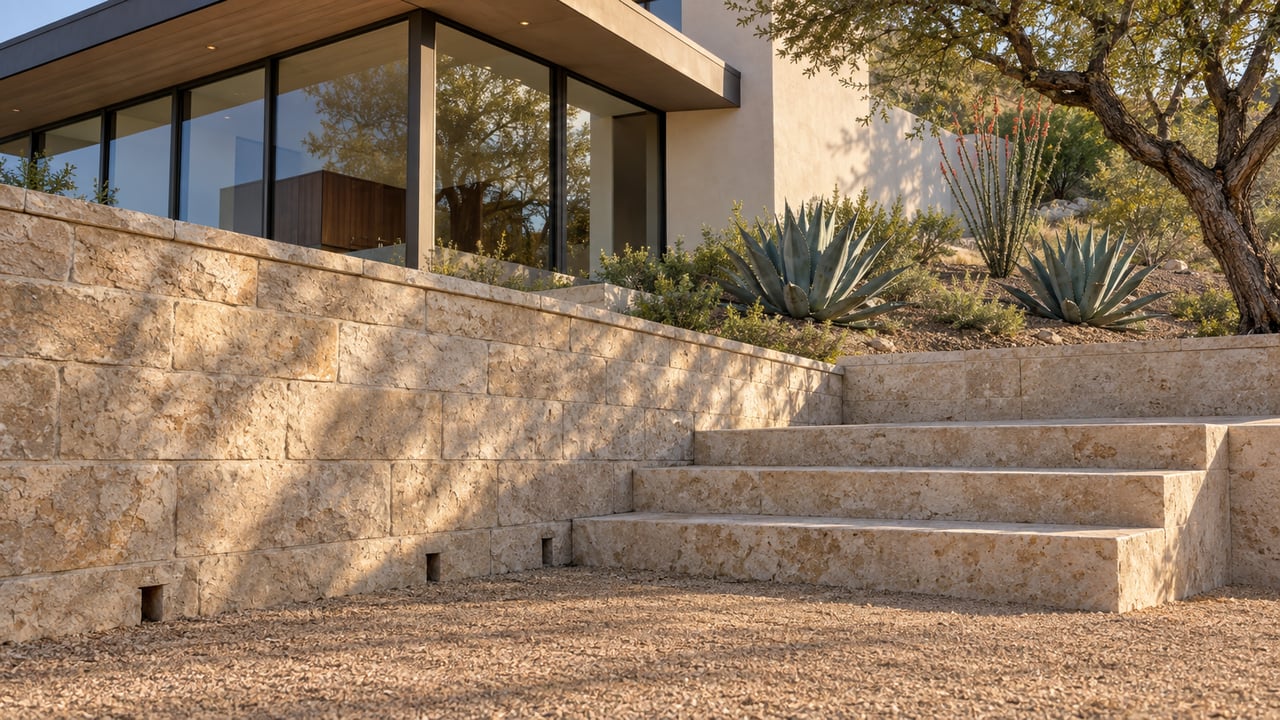
That engineering is not optional trim. On a genuine hillside parcel, you're looking at an engineered foundation, cut-and-fill grading, and retaining walls sized to hold back real lateral pressure, not decorative garden walls. Local hardscape contractors price retaining walls in the range of $65 to $95 per linear foot for a standard four-foot height, and they add another 15 to 25 percent on top of that for hillside access and drainage complexity, according to Fountain Hills Concrete. Most of the town also sits on caliche hardpan, a calcium-cemented soil layer that has to be mechanically broken before concrete can go in at all, which is its own line item most buyers never budget for.
Here is what that adds up to when you're comparing two lots with the same asking price:
| Cost Driver | Typical Range in Fountain Hills (2026) |
|---|---|
| Retaining wall, 4-ft height | $65–$95 per linear foot |
| Hillside access / drainage premium | +15–25% on top of base wall pricing |
| Full custom build, standard lot | $325–$650 per square foot |
| Full custom build, hillside estate | $800+ per square foot |
| NPOA title transfer fee | $335, one time, due at close |
| NPOA disclosure fee | $400, due at close |
A moderate-slope lot and a steep hillside lot at the identical list price are not the identical deal. One needs a short retaining wall and standard grading. The other needs a longer, taller, more heavily engineered wall, more excavation, and a foundation built for a different set of loads. The list price is the same. The check you write before framing starts is not.
According to AZ Inspired Living, Fountain Hills also requires whole-house fire sprinkler systems and builds to the town's 2024 International Codes, which went into effect September 1, 2025. Combined with the hillside limits and the town's impact fee, that's why a custom build here runs $325 to $650 per square foot in 2026, with hillside estates climbing past $800. None of that is negotiable finish work you can trim later. It's structural, and it's specific to this address.
Some Fountain Hills properties fall within the jurisdiction of the Neighborhood Property Owners' Association (NPOA), which operates differently from a conventional HOA.
The NPOA was formed in 1992 to uphold the development guidelines originally set by McCulloch Properties, the town's master developer. It is not a homeowners association under Arizona's Planned Community Act, and it collects no monthly dues or annual assessments. Its authority comes from a recorded Declaration of Reservations that runs with the deed on roughly 4,100 lots across town. If your plat falls inside that jurisdiction, membership is not a choice you make. It's tied to the property and transfers with title.
The NPOA's working committee, the Neighborhood Committee of Architecture, meets on the first and third Wednesday of each month and reviews building plans for new construction along with nearly every exterior alteration you can name, from repainting to pools to solar. For a builder or a buyer planning to develop a lot, that review sits alongside the town's own permitting process, not instead of it.
Properties inside NPOA jurisdiction carry a one-time $335 title transfer fee and a separate $400 disclosure fee, both due at close of escrow. Together, the two fees total $735 on the settlement statement. Not every plat in Fountain Hills is inside NPOA jurisdiction. Finding out means checking your plat, block, and lot number against the NPOA's jurisdiction map before you write an offer, not after.
Put the two pieces together and the lesson is straightforward. On a hillside lot, the buildable envelope, the wall you'll need, and the soil under your feet are worth pricing before you fall in love with a view. In neighborhoods like SunRidge Canyon, FireRock, Eagle Mountain, or gated hillside communities like Crestview, that view is exactly what commands the premium, whether it's Four Peaks, Red Mountain, city lights, or the fountain itself. But the same topography that creates the view is what drives the grading and wall costs on the back end.
Fountain Hills is also a designated dark-sky community, which means exterior lighting on a hillside or view property is shaped by rules meant to preserve the night sky. That's a smaller issue than grading costs or NPOA fees, but it's one more design constraint worth understanding before you commit to a lighting plan for a home built to show off its view after sunset.
None of this should scare a serious buyer away from land here. It should change what due diligence looks like before an offer goes in.
Before writing on any Fountain Hills lot, especially a hillside or view parcel, work through this:
Is the NPOA the same thing as an HOA? No. It collects no monthly dues or annual assessments, but membership is mandatory for any lot inside its jurisdiction, and it enforces architectural guidelines through a recorded deed restriction rather than a homeowners association structure.
How do I find out if a specific lot is inside NPOA jurisdiction? Your plat, block, and lot number will be on your title report or survey. The NPOA maintains a jurisdiction map and can confirm status directly if the plat number alone doesn't settle it.
Does every lot in Fountain Hills require a retaining wall? No. Flatter lots often need standard grading and little else. The disturbance limits and retaining wall requirements apply specifically to lots with slopes of 20 percent or greater under the town's hillside code.
A lot's list price is where the conversation starts, not where it ends. If you're weighing a hillside parcel, a view lot, or a custom build anywhere in Fountain Hills, John Zook can walk the site with you, price the real cost of the ground, and help you write an offer that accounts for what the listing photo doesn't show. Let's Connect.
This article is general information, not legal, tax or financial advice. Consult a qualified professional about your situation.
Experience a real estate partnership built on trust, expertise, and genuine care. John brings a lifelong understanding of what “home” truly means to every client and every decision.